

Ēostre – The Pagan Goddess of Easter


In this post, we explore the pagan roots of Easter, its connection to the spring goddess Ēostre, whose name is remembered in today’s Christian festival. Read this thought-provoking alternative to the origins of our Easter celebrations.
Owen
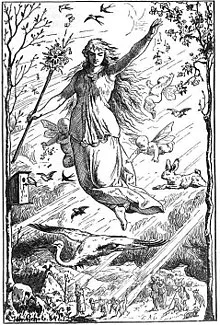
1. A Goddess called Easter
So, what’s the real story behind Easter and what on earth do Easter Eggs and Easter Bunnies have to do with the resurrection of Jesus?
Well, nothing, as it turns out..
According to the Venerable Bede (673 – 735 AD), Easter isn’t a Christian word at all.. In his eighth-century treatise, The Reckoning of Time, he reckons that the name “Easter” actually derives from the name of a pagan spring goddess called Ēostre (pronounced “oos-ta-ra”), who was widely venerated in England before the arrival of Christianity in the 1st century.
2. The Easter Hare
The worship of Ēostre may also be a source of our modern day Easter Bunny, since her sacred animal was said to be the hare, itself symbolic of the coming of spring. This makes a lot of sense, given that there is no tenable link between hares and Christian tradition and the latter did not arrive in Britain until after the Roman conquest in 43 AD.
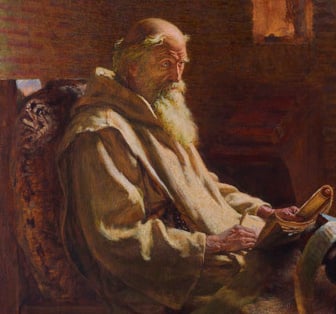
“Eosturmonath [Easter Month].. was once called after a goddess of theirs named Eostre, in whose honour feasts were celebrated in that month. Now they designate that Paschal season by her name.”
– Bede, The Reckoning of Time
3. Easter Eggs
Like hares, eggs (and the chickens that lay them) also play no part in Jesus tradition and all three are markedly absent from Christian iconography, which celebrates instead animals such as the dove, the donkey and the lamb, and foodstuffs like figs, olives, bread and fish, all of which are mentioned in the Gospels.
Over the centuries, Christian embarrassment over the absence of Easter eggs in Christian tradition has prompted church historians to claim that Easter eggs originated in Mesopotamia, where eggs were painted red to commemorate the blood of Christ.
Yet, this explaination fails almost at once, as egg-painting was common in many pre-Christian cultures and we know from Roman authors, such as Dio Cassius and Julius Caesar, that both hares and chickens were held as sacred animals in Britain long before the arrival of Christianity.
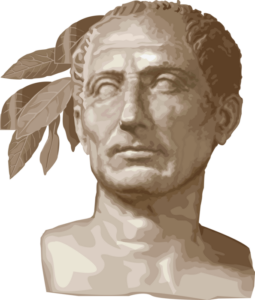
“The Britons consider it contrary to divine law to eat the hare, the chicken, or the goose; they, however, breed them for amusement and pleasure.”
– Julius Caesar – De Bello Gallico
Modern paganism’s equally suspect account of the origins of Easter hares and Easter eggs derives from a myth wherein Ēostre saves the life of a dying bird by transforming it into a hare. Having once been a bird, the hare retained its ability to lay eggs, which it then dutifully laid at her feet every spring equinox.
Historically, this too, has little to commend it and is most likely a neo-pagan invention from the 19th century, perhaps based on an earlier myth about the equivalent German goddess, Ostara.
There is, however, an alternative and more rational explanation for Easter eggs and even egg-laying hares that may not stretch credulity..
4. Quail Eggs and Hare Nests
Hares are commonly found in large, open grasslands and fields. Unlike rabbits, they do not burrow but dig out depressions in the ground where they sleep and have their young. These hare nests (known as forms) can be very attractive to ground-nesting birds such as lapwings, which share the same environment and are known to sometimes borrow abandoned hare nests to lay their eggs in.

Before being protected in 1921, lapwing eggs (then known as quail eggs) were an important supplement to the British rural diet and the annual spring collecting of them was an event that’s still remembered in the Easter egg hunt enjoyed by children today.
Could it be that egg collectors of yore (most likely children), stumbling upon hare nests, occasionally containing lapwing eggs, are another probable source for the origin of the Easter egg/bunny tradition? We may never know..
5. Conclusion
A pagan spring goddess called Ēostre (“oos-ta-ra”), who was believed to take the form of a hare, combined with a bygone annual hunt for quail eggs (occasionally found in hare nests) seems a far more credible explanation for the origins of Easter than the alleged resurrection of a crucified man, whose story has no resonance whatever with either hares, eggs or even the name Easter itself..
By the time of the Venerable Bede, all pagan festivals in England had been abolished or rebranded as overtly Christian feast days. Ironically, these festivals are now being reclaimed by neo-pagan and metaphysical faiths, such as Wicca, while Christianity, the religion that appropriated these festivals for its own dogmatic ends, is now, itself, in sharp decline, a fact that must now have the Venerable Bede turning in his grave..



